
BORE HOLE LATRINE
INTRODUCTION:
The bore hole latrine, a sanitation innovation introduced during the 1930s, holds a significant place in the history of public health initiatives. Although it has largely been phased out by more advanced sanitation methods, understanding its historical significance and the public health importance it once held is crucial. This document explores the bore hole latrine, its construction, merits, and limitations, and its role in promoting public health.
HISTORICAL BACKGROUND:
The bore hole latrine was first introduced in the United States in the 1930s as part of a campaign to control hookworm disease, spearheaded by the Rockefeller Foundation. Its design and purpose were simple yet effective – to provide a sanitary solution for human waste disposal in areas lacking proper sanitation infrastructure.
CONSTRUCTION AND DESIGN:
A bore hole latrine is characterized by the following features:
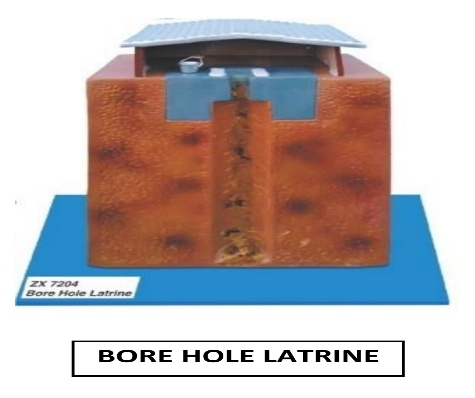
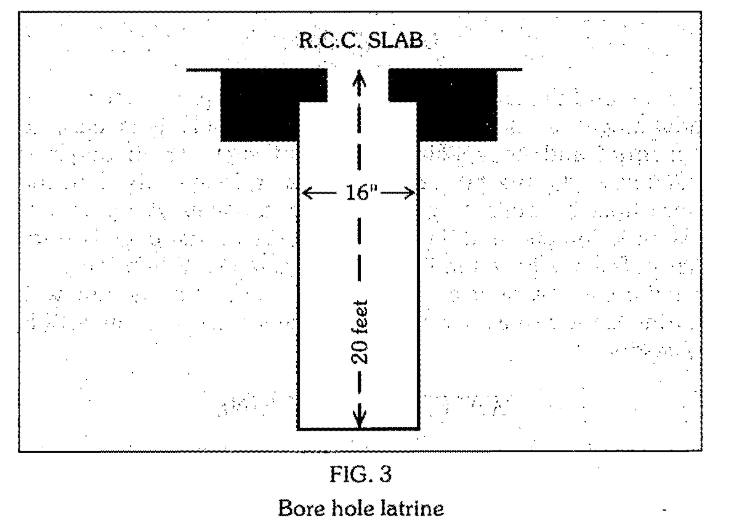
• A circular hole, 30 to 40 cm (12-16 inches) in diameter.
• Dug vertically into the ground to a depth of 4 to 8 meters (13-26 feet), with 6 meters (20 feet) being the most common depth.
• The use of a specialized equipment known as an auger to dig the hole.
• In loose and sandy soils, the hole is lined with bamboo matting or earthen-ware rings to prevent soil collapse.
• A concrete squatting plate with a central opening and footrests is placed over the hole.
• Provision of a suitable enclosure for privacy.
MERITS OF BORE HOLE LATRINE:
The bore hole latrine had several merits that made it a valuable public health asset during its time:
1. Self-Contained: There was no need for the services of a sweeper for daily removal of night soil.
2. Fly Repellent: The pit’s darkness made it unsuitable for fly breeding, reducing the risk of disease transmission.
3. Reduced Water Contamination: When located at least 15 meters (50 feet) away from a water source, there was minimal danger of water pollution.
PUBLIC HEALTH IMPORTANCE:
Bore hole latrines played a crucial role in improving public health during their heyday:
1. Hookworm Control: The introduction of bore hole latrines was a key component of campaigns to control hookworm disease, as these latrines prevented the contamination of soil with hookworm larvae, significantly reducing the incidence of the disease.
2. Disease Prevention: Bore hole latrines helped mitigate the spread of waterborne diseases, which were a major public health concern in areas lacking proper sanitation facilities.
3. Improved Sanitation: For families with limited access to modern sanitation, bore hole latrines provided a safer and more sanitary alternative to open defecation.
LIMITATIONS AND PHASING OUT:
Despite its merits, bore hole latrines faced certain limitations that led to their gradual phasing out:
a) Limited Capacity: Bore holes filled up rapidly due to their small capacity, requiring frequent digging of new holes.
b) Special Equipment: The construction of bore hole latrines required a specialized tool, the auger, which was not always readily available.
c) Unsuitable Soils: In areas with high subsoil water levels and loose soil, digging a hole deeper than 3 meters (10 feet) was challenging.
CONCLUSION:
The bore hole latrine, a pioneering sanitation solution in its time, played a vital role in improving public health, especially in regions with poor sanitation infrastructure. Its introduction marked a significant step towards disease control and improved sanitation. While it has been largely replaced by more advanced sanitation methods, understanding the historical significance of the bore hole latrine is essential to appreciate the progress in public health and sanitation over the years.