
NAMO
NAMO
NAMO
NAMO
NAMO
NAMO
NAMO
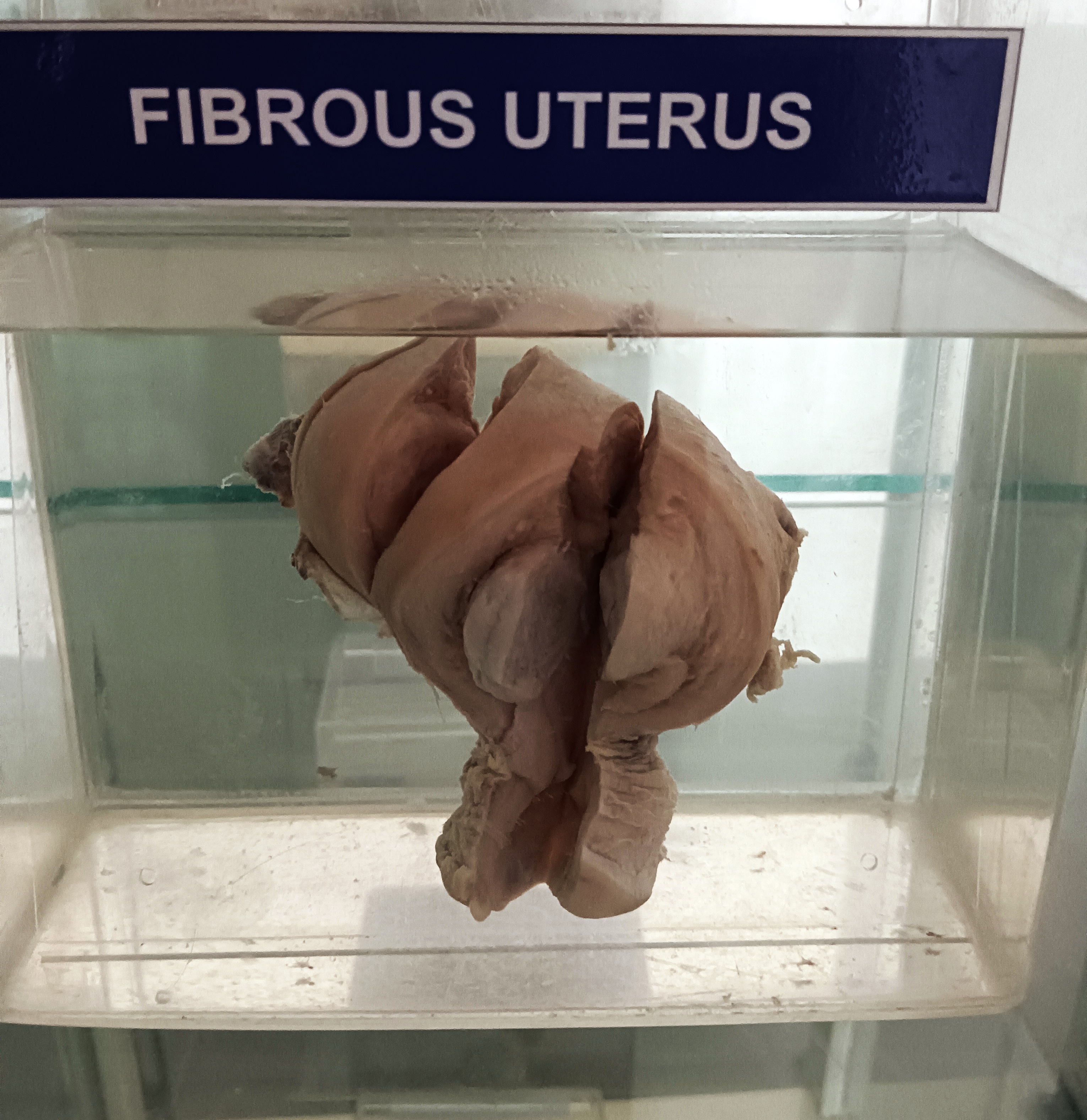
Specimen Image

ancers of the uterus include tumors that originate from epithelial or mesenchymal tissue. Tumors that arise from the epithelium are referred to as adenocarcinomas, whereas tumors that arise from mesenchymal tissue (i.e., connective, muscular, vascular) are referred to as sarcomas. These tumors may be found in various locations of the uterus including the endometrium or myometrium.

Historically, endometrial adenocarcinomas were divided into two categories: Type 1 and Type 2. Type 1 endometrial carcinomas refer to endometrioid subtypes, whereas Type 2 endometrial carcinomas refer to serous, clear cell, and mixed Mullerian subtypes (see “Endometrial Cancer”). Recent molecular studies have shown carcinosarcomas (MMMT) to be closely related to epithelial tumors compared to sarcomas.

This chapter will focus on sarcomas of the uterus arising from the endometrial stroma or myometrium.

SYNONYMS


  • Sarcomas of the uterus
  • Leiomyosarcomas
  • Endometrial stromal sarcoma
  • Adenosarcomas
  • Undifferentiated sarcoma

View full size

ICD-10CM CODES

C54.1

Malignant neoplasm of endometrium

C54.2

Malignant neoplasm of the myometrium

C54.0

Malignant neoplasm of isthmus uteri

C54.8

Malignant neoplasm of overlapping sites of corpus uteri


EPIDEMIOLOGY & DEMOGRAPHICS

INCIDENCE & PREVALENCE:

Incidence of all uterine cancer is 28.1 per 100,000 women per year with 5.2 deaths per 100,000 women as of 2024. In the most recent update from Surveillance, Epidemiology, and End Results (SEER) Annual Report to the Nation, uterine cancer showed the highest increase frequency in death of all cancers among U.S. women. Endometrial cancer remains the most common uterine malignancy in the U.S.; however, sarcomas of the uterus are rare. Sarcomas account for approximately 3% to 8% of all cancers of the uterine corpus. Sarcomas are associated with a poor prognosis compared to endometrial cancer.

PREDOMINANT AGE:

Mean age at diagnosis: 50 yr old

RISK FACTORS:

Box E1 describes risk factors for uterine sarcoma.

BOX E1

From Fielding JR et al: Gynecologic imaging, Philadelphia, 2011, Saunders.

Risk Factors for Uterine Sarcoma


  • Nulliparity

  • Obesity

  • History of pelvic radiation

  • Exposure to tamoxifen


PHYSICAL FINDINGS & CLINICAL PRESENTATION


  • Abnormal vaginal bleeding is the most common symptom (90% of women with diagnosis)

  • Vaginal discharge also may be a presenting symptom (10% of these patients have non-bloody discharge)

  • May also present as pelvic pain or pressure and pelvic mass on examination (10% of women with uterine sarcoma)

  • Urinary symptoms

  • Abdominal pain or distention

  • Weight loss


ETIOLOGY


  • Endometrial cancers are thought to derive from an excess of unopposed estrogen causing a proliferation of disorganized dysplastic endometrium.

  • A minority of patients may have a genetic predisposition for endometrial cancer (Lynch syndrome).

  • The exact etiology for sarcomas is largely unknown.


Image removed. DIAGNOSIS


  • Endometrial biopsy or dilation and curettage with histologic evidence of malignancy OR

  • Postsurgical histologic examination of uterine tissue


DIFFERENTIAL DIAGNOSIS


  • Endometrial hyperplasia

  • Endometrial polyp

  • Leiomyoma


WORKUP

Diagnosis can be made histologically by biopsy for abnormal bleeding. Workup includes biopsy (in the office or operating room, in conjunction with hysteroscopy) and imaging (see “ Imaging Studies ”). Surgical removal of the uterus is the most common way to diagnose a uterine sarcoma. Histologic criteria include mitotic index, cellular atypia, loss of polarity, and necrosis.

LABORATORY TESTS


  • CBC

  • Comprehensive metabolic panel (CMP)

  • CA-125 (high levels can be a sign of metastasis, not diagnostic, not always elevated)


IMAGING STUDIES


  • Pelvic ultrasound is a lower-cost method of detecting uterine corpus mass or thickened endometrial lining. Features concerning for uterine sarcoma: Heterogeneous texture, central necrosis, irregular vessel distribution, and rapid growth of the uterus.

  • Chest x-ray examination should be considered for preoperative testing with suspicion of uterine sarcoma.

  • Computed tomography (CT) scans ( Fig. E1 ), MRI, and PET may be useful for assessing tumor spread once diagnosis is made or characterizing a uterine mass.

    Image removed.

    FIG. E1

    A 50-yr-old patient with uterine sarcoma.

    A, Axial contrast-enhanced computed tomographic (CT) image. Low-attenuation lobulated and infiltrating soft tissue fills the endometrial canal (arrows), extending into the myometrium. B, Axial contrast-enhanced CT image showing same as A. Low-attenuation, lobulated, and infiltrating soft tissue fills the endometrial canal, extending into the myometrium. C, Axial contrast-enhanced CT image. Low-attenuation lobulated and infiltrating soft tissue fills the endometrial canal. Subtle myometrial invasion is seen anterior and posterior (arrows) . D, Axial contrast-enhanced CT image. Low-attenuation lobulated and infiltrating soft tissue fills the endometrial canal (arrow), showing same. Subtle myometrial invasion is seen fundally.

    (From Fielding JR et al: Gynecologic imaging, Philadelphia, 2011, Saunders.)


STAGING

Staging of endometrial carcinoma and uterine adenosarcoma is summarized in Tables E1 and E2 .

View full size

TABLE E1

International Federation of Gynecology and Obstetrics 2023 Staging for Endometrial Carcinoma (Including Carcinosarcoma)

Gaffney D et al: 2023 FIGO staging system for endometrial cancer: the evolution of the revolution, Gynecol Oncol 184:245-253, 2024. doi:10.1016/j.ygyno.2024.02.002.

Stage

I

Confined to the uterine corpus and ovary

I A

Disease limited to the endometrium OR nonaggressive histologic type, i.e., low-grade endometrioid, with invasion of less than half of myometrium with no or focal lymphovascular space involvement (LVSI) OR good prognosis disease

I A1

Nonaggressive histologic type limited to an endometrial polyp OR confined to the endometrium

I A2

Nonaggressive histologic types involving less than half of the myometrium with no or focal LVSI

I A3

Low-grade endometrioid carcinomas limited to the uterus and ovary

I B

Nonaggressive histologic types with invasion of half or more of the myometrium, and with no or focal LVSI

I C

Aggressive histologic types limited to a polyp or confined to the endometrium

II

Invasion of cervical stroma without extrauterine extension OR with substantial LVSI OR aggressive histologic types with myometrial invasion

II A

Invasion of the cervical stroma of nonaggressive histologic types

II B

Substantial LVSI of nonaggressive histologic types

II C

Aggressive histologic types with any myometrial involvement

III

Local and/or regional spread of the tumor of any histologic subtype

III A

Invasion of uterine serosa, adnexa, or both by direct extension or metastasis

III A1

Spread to ovary or fallopian tube (except when meeting stage IA3 criteria)

III A2

Involvement of uterine subserosa or spread through the uterine serosa

III B

Metastasis or direct spread to the vagina and/or to the parametria or pelvic peritoneum

III B1

Metastasis or direct spread to the vagina and/or the parametria

III B2

Metastasis to the pelvic peritoneum

III C

Metastasis to the pelvic or paraaortic lymph nodes or both

III C1

Metastasis to the pelvic lymph nodes

III C1i

Micrometastasis

III C1ii

Macrometastasis

III C2

Metastasis to paraaortic lymph nodes up to the renal vessels, with or without metastasis to the pelvic lymph nodes

III C2i

Micrometastasis

III C2ii

Macrometastasis

IV

Spread to the bladder mucosa and/or intestinal mucosa and/or distance metastasis

IV A

Invasion of the bladder mucosa and/or the intestinal/bowel mucosa

IV B

Abdominal peritoneal metastasis beyond the pelvis

IV c

Distant metastasis, including metastasis to any extraabdominal or intraabdominal lymph nodes above the renal vessels, lungs, liver, brain, or bone

View full size

TABLE E2

International Federation of Gynecology and Obstetrics 2009 Staging for Uterine Sarcoma (Including Leiomyosarcoma and Endometrial Stromal Sarcoma)

From Niederhuber JE: Abeloff’s clinical oncology, ed 6, Philadelphia, 2020, Elsevier.

Stage

I

Tumor limited to the uterus

I A

Tumor 5 cm or less in greatest dimension

I B

Tumor more than 5 cm

II

Tumor extends beyond the uterus, within the pelvis

II A

Adnexal involvement

II B

Extrauterine pelvic tissue involvement

III

Involvement of abdominal tissues

III A

1 site

III B

>1 site

III C

Regional lymph node metastasis

IV

IV A

Tumor invades bladder or rectum

IV B

Distant metastases


Image removed. TREATMENT


  • Treatment for sarcomas is based on the method in which diagnosis was made. If diagnosed after a hysterectomy, surgical resection for residual tumor or tube/ovary may be performed. If diagnosis made by biopsy, surgical resection is based on the symptoms and extent of the disease.

  • Further treatment depends on the type of cancer, histologic grade, and stage.

    • 1.

      Low-grade endometrial stromal sarcoma: Stage 1 disease is usually followed up by surveillance after surgery. A higher staged disease may be offered external beam radiation therapy and/or antiestrogen hormone therapy.

    • 2.

      High-grade endometrial stromal sarcoma, undifferentiated uterine sarcoma, and uterine leiomyosarcoma: Stage 1 disease can be followed with surveillance. Chemotherapeutic agents and external beam radiation therapy can be considered for stage 2 or higher.


DISPOSITION


  • Survival varies with each type of sarcoma but is generally very poor. Box E2 describes uterine prognostic factors.

    BOX E2

    From Fielding JR et al: Gynecologic imaging, Philadelphia, 2011, Saunders.

    Uterine Sarcoma Prognostic Factors


    • Tumor stage

    • Tumor grade

    • Tumor size

    • Patient age

    • Vascular space involvement

    • Mitotic count

    • Residual disease at surgery or uterine morcellation

    • Adjuvant chemotherapy


  • 5-yr survival for grade I endometrial stromal sarcoma is 91% and drops to 42% for grade III.

  • 5-yr survival for leiomyosarcoma ranges from 76% for stage 1 to 29% for stage 4.

  • 5-yr survival for undifferentiated sarcoma ranges from 70% for stage 1 to 23% for stage 4.


REFERRAL


  • A gynecologic oncologist should manage uterine sarcoma.

  • Key points in the management of uterine sarcoma are described in Box E3 .

    BOX E3

    From Greer IA et al: Mosby’s color atlas and text of obstetrics and gynecology, London, 2001, Harcourt.

    Uterine Sarcoma:

    Key Points


    • The disease mainly affects women aged 40-60 yr old depending on the type of sarcoma.

    • Patients may present with abnormal uterine bleeding, abdominal distention, enlarging pelvic mass, pelvic pain/pressure, or may be asymptomatic.

    • The primary treatment is hysterectomy and bilateral salpingo-oophorectomy.

    • Adjuvant radiotherapy to the pelvis and/or systemic chemotherapy may be considered if > stage 1 sarcoma.

Specimen Number
54