
Specimen Image
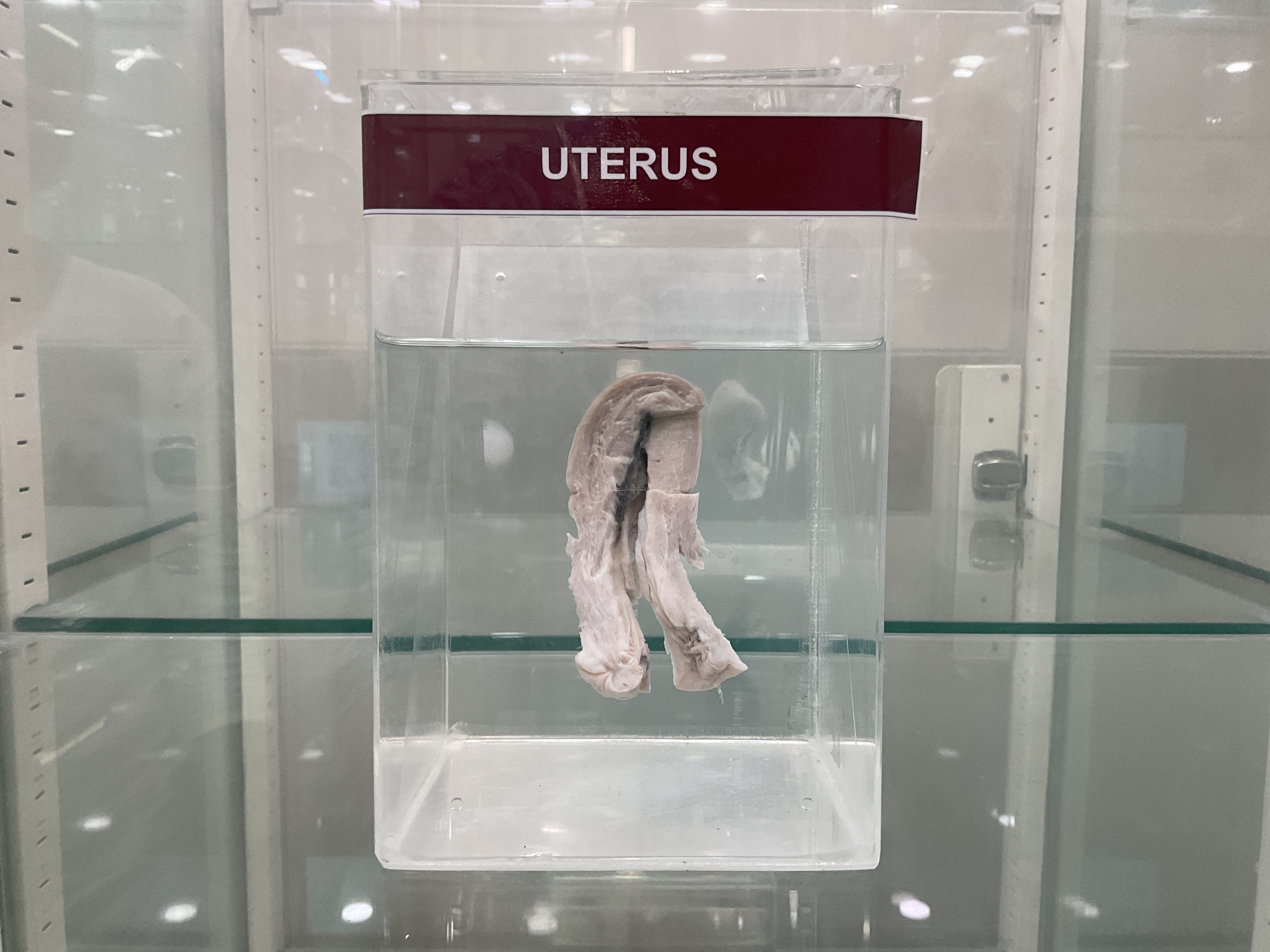
The uterus, also known as the womb, is a hollow, muscular organ located in the pelvis of females. It is where a fetus grows and develops during pregnancy. The gross anatomy of the uterus includes the following features:
- Size: The uterus is approximately the size of a pear and measures around 7.5 cm long, 5 cm wide, and 2.5 cm thick in non-pregnant women. However, its size can increase during pregnancy and in certain conditions like fibroids.
- Shape: The uterus has a pear-like shape, with a narrow upper portion called the fundus, a middle section called the body, and a lower section called the cervix.
- Layers: The wall of the uterus is composed of three layers: the outermost layer called the perimetrium, the middle layer called the myometrium (composed of smooth muscle), and the innermost layer called the endometrium (which undergoes cyclic changes during menstrual cycle).
- Blood supply: The uterus is supplied with blood by the uterine arteries, which branch off from the internal iliac arteries.
- Ligaments: The uterus is held in place by several ligaments, including the broad ligament, round ligament, and uterosacral ligament.
- Openings: The cervix of the uterus has an opening called the external os, which opens into the vagina. The upper end of the uterus has two openings called the fallopian tubes or oviducts, which open into the abdominal cavity.

Rack Number
Specimen Number
50