
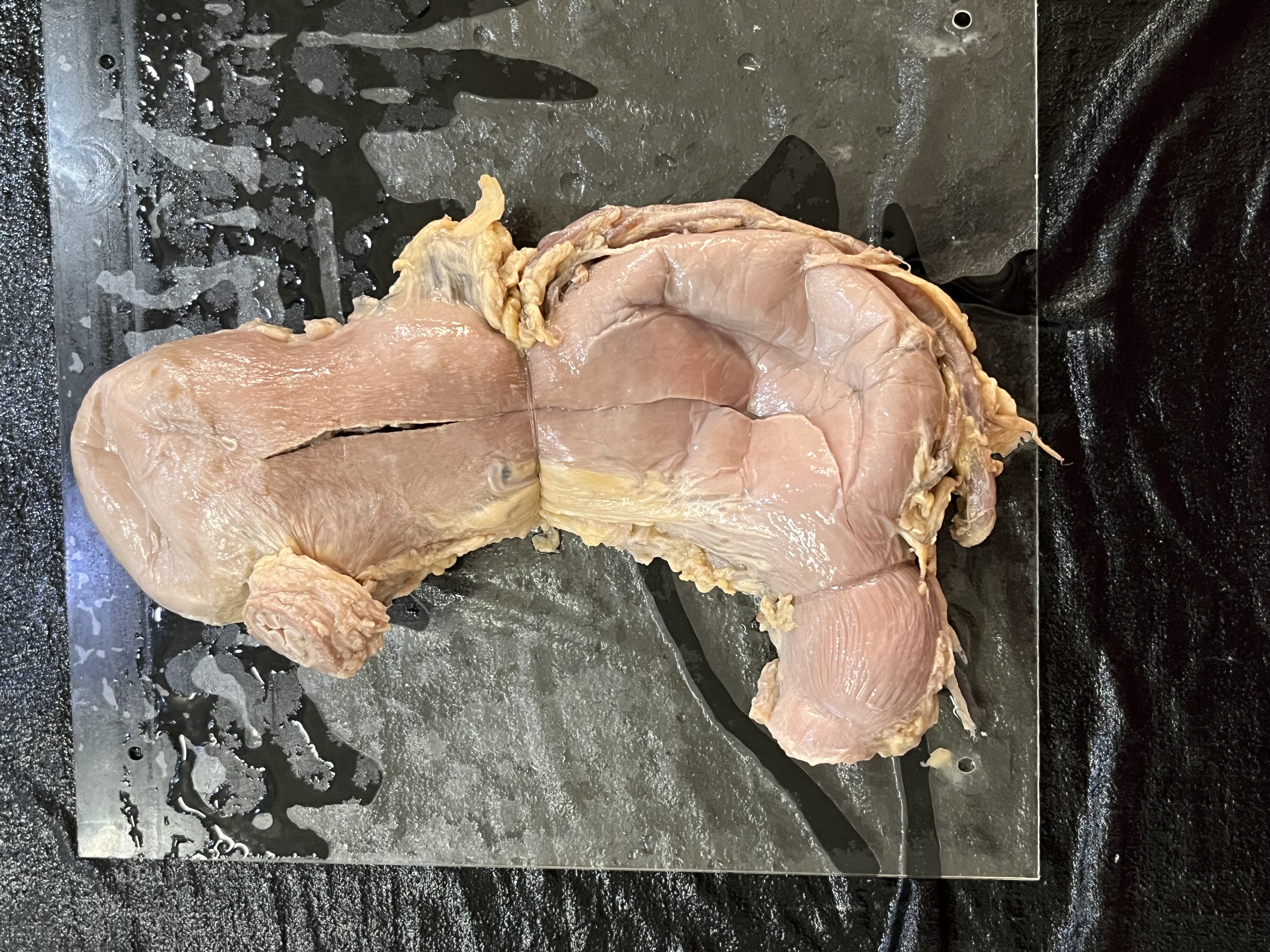
Role of the Ileocecal Junction
In humans, the ileocecal junction regulates colonic filling and prevents colo-ileal reflux, thereby largely preventing contamination of the small bowel with colonic bacteria. In the fasting state, cecal filling is slow and erratic, and chyme is retained in the distal ileum for prolonged periods. 21 The close physical link between the terminal ileum and the cecum by the ileocecal ligaments behaves functionally as a valve and is responsible in part for continence of the ileocecal junction. A specialized band of muscle forms a low-pressure tonic sphincter 22 and prominent 6 cpm phasic contractions are likely to contribute to the resistance of the ileocecal junction. Phasic and tonic activities are inhibited during episodes of flow from the terminal ileum or distention of the ileum. Conversely, the tone of the ileocecal junction increases during cecal distention. 22
Phase III of the interdigestive motor cycle (or migrating myoelectric/motor complex), a motor pattern that occurs every 90–120 minutes in the upper intestine during fasting (see Chapter 101 ), does not contribute to ileocecal transit because it rarely reaches the terminal ileum in humans. Ileal propagating contractions, synchronized with inhibition of phasic contractions of the ileocecal junction, account for most ileocecal propulsion, which occurs in a pulsatile fashion. Prolonged studies that correlated propulsion of isotope with intraluminal pressures show that 72% of episodes of ileocecal transport resulted from propagating pressure waves in the terminal ileum. 23 Furthermore, 93% of cecal propagating pressure waves were temporally associated with cecal filling. This suggests that episodic cecal filling may be one of the triggers for proximal colonic HAPCs.
The Colon as a Storage Organ
Scintigraphic and wireless capsule studies have shown that the ascending and transverse colon appear to be the primary storage sites. 24 , 25 Composition of the diet can influence regional transit and may account for differences in dwell time throughout the colon. With a liquid meal, the ascending colon empties rapidly, within 1–2 hours, whereas the transverse colon retains isotope for 20–40 hours. 26 A solid meal is associated with slower transit through the cecum and ascending colon. With a mixed diet, particulate matter and liquids are stored in both the ascending and transverse colon. 27