
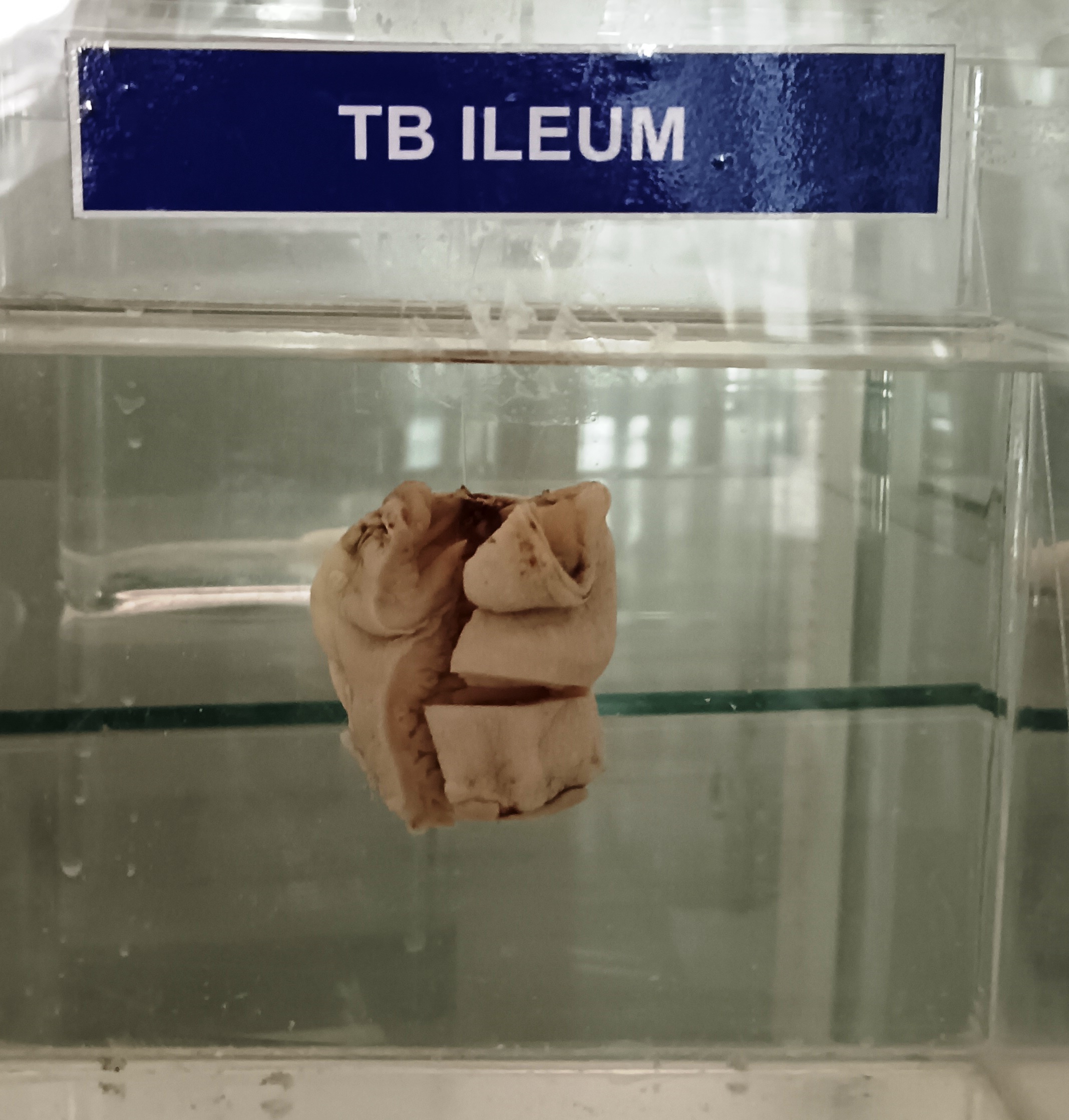
Tuberculosis of the ileum is a rare form of extrapulmonary tuberculosis that can present with chronic abdominal pain, diarrhea, and weight loss. The diagnosis is often challenging and requires a high degree of suspicion.
Histopathological examination of the ileal biopsy samples showed granulomatous inflammation with caseating necrosis, consistent with tuberculosis. Acid-fast bacilli (AFB) were detected on Ziehl-Neelsen staining.
The patient was started on a four-drug antitubercular regimen consisting of isoniazid, rifampicin, pyrazinamide, and ethambutol. Her symptoms improved gradually, and she gained weight. Follow-up colonoscopy after 6 months of treatment showed complete healing of the ulcers and resolution of the perilesional lymphadenopathy.
Intestinal tuberculosis is a common clinical problem in India. The clinical features of this disease are nonspecific and can be very similar to Crohn's disease. Radiological evaluation of the small bowel has undergone a paradigm shift in the last decade. This long tubular organ that has traditionally been difficult to evaluate can now be well-visualized by some innovative imaging and endoscopic techniques. This article highlights the state-of-the-art evaluation of ulceroconstrictive diseases of the bowel and provides recommendations for the differentiation of intestinal tuberculosis from Crohn's disease.
